A camera doesn't usually kill a Westside sale. The paperwork does.
Sellers picture the worst-case scenario as a plumber's video feed finding a collapsed clay pipe under the driveway, a five-figure repair bill, a deal that falls apart over mud and roots. That happens, but it's the rarer failure. The more common one is quieter: a seller who is certain they already qualify for an exemption from the city's sewer lateral inspection, lists the home on that assumption, and then spends a week of escrow trying to produce a permit record that either doesn't exist or doesn't satisfy what the city will accept. The pipe was never the problem. The file was.
What the Ordinance Actually Requires
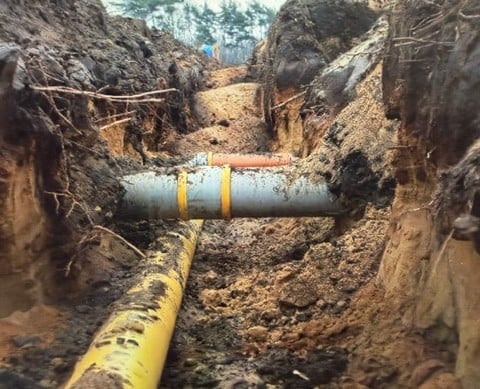
Since 2018, the City of Santa Cruz's Sanitary Sewer System Ordinance has required anyone selling property inside city limits to have their sewer lateral, the privately owned pipe running from the house to the public main in the street, inspected by a licensed, city-approved contractor before the sale can close. If the inspection turns up defects, the seller repairs them or files a Transfer of Responsibility form shifting that repair to the buyer, who then has a defined window after closing to complete the work. Either way, a compliance form has to reach the city's Public Works department before escrow finishes.
Two things exempt a property from a fresh inspection. The lateral was built or completely replaced after 2010 and is less than 20 years old at time of sale, or the lateral was already inspected and cleared within the five years before the sale. Both sound simple. Neither one is automatic.
Why the Exemption Trips People Up
If a seller had lateral work done years ago and assumes that covers them, the city still needs documentation in a format it accepts, not a recollection of a plumber's visit or a general remodel permit that never touched the sewer line. A kitchen renovation doesn't reset the clock on the lateral. Neither does a vague memory that "someone looked at that a few years back." The seller has to produce the actual inspection or replacement record, and if it isn't on file, the assumption of exemption evaporates the moment an offer is on the table and a closing date is already circled on the calendar.
That is the part that catches Westside sellers specifically, because the exemption depends on paperwork density, and paperwork density depends on age. A lateral replaced in 2015 has a real shot at a clean file. A lateral nobody has touched since the Truman administration does not.
Why This Lands Harder Here Than Elsewhere in the City
Santa Cruz as a whole has old infrastructure, but the Westside carries a disproportionate share of it. During public comment on the ordinance before the city's Transportation and Public Works Commission, one submission put it plainly: the Westside has many old clay pipes that are long past their shelf life. Homes built before the 1950s in this part of the city commonly run on clay tile laterals with cement mortar joints, exactly the material that degrades over decades and the exact profile that tree roots exploit. None of that means every Westside lateral is failing. It means the odds of walking into a clean exemption on a home built in that era are lower than they are for a 2016 build in a newer subdivision, and a seller who hasn't checked assumes good odds by default.
The fix isn't dramatic. It's sequencing. Requesting the lateral inspection before listing, rather than waiting for a buyer's inspection contingency to force the issue, means a seller finds out on their own timeline. If the pipe is fine, that video becomes proof, not a liability, protecting against a buyer who later claims a defect went undisclosed. If it needs work, the repair happens before a closing date exists to pressure it.
What This Actually Costs
The numbers vary by property, but the general shape is consistent. A lateral inspection with an existing cleanout typically runs in the low hundreds of dollars. Without one, the cost climbs because the plumber has to create access before the camera can even run the line. If the property needs a cleanout installed at the sidewalk, which the city requires to pass inspection, that installation commonly falls in the $600 to $1,800 range depending on the site. Older properties sometimes still have street traps, an outdated fitting the city now requires removed as part of passing inspection, and removing one of those can run into the thousands depending on how it was originally installed.
None of these numbers are catastrophic on their own. What makes them expensive is timing. A repair estimate that arrives during a buyer's inspection contingency, with a lender waiting on a clear closing date, carries more leverage against the seller than the same estimate would carry three months earlier during a quiet pre-listing walkthrough.
A Few Questions Worth Asking Before You List
Does this apply to condos or property with an HOA? If the property is part of a homeowners association, the responsibility for the shared sewer system may sit with the HOA rather than the individual owner. That determination comes from the HOA's governing documents and management company, not the city ordinance directly, so it's worth confirming early rather than assuming either way.
What if I already had lateral work done but can't find the paperwork? Contact the City of Santa Cruz Public Works department before listing. If the work was permitted, there may be a record on file even if the seller's personal copy is long gone. If there isn't one, budget for a fresh inspection rather than counting on an exemption that can't be documented.
Is a video inspection the same as a general home inspection? No. A standard home inspection does not include a sewer camera run. The lateral inspection is a separate, specific service performed by a contractor on the city's approved list, using a video camera fed through a cleanout or access point.
Does the five-year clean inspection reset if I do other plumbing work? No. The exemption is tied to the lateral itself, not to general plumbing activity in the home. A new water heater or repiped bathroom doesn't touch the lateral's status.
The full text of the ordinance and the city's inspection forms are available through the City of Santa Cruz Public Works sewer lateral page, and the underlying code language sits in Chapter 16.08 of the Santa Cruz Municipal Code for anyone who wants to read the requirement in its original form before a listing conversation rather than during one.
If you're weighing a Westside sale and want to know where your specific property sits on this before you list, Mike O'Boy has spent three decades untangling exactly this kind of local detail with Santa Cruz County sellers. Connect With Us Today.